Introduction
Are you searching for NYT Strands Hints Today? Keeping a long daily winning streak alive can sometimes feel incredibly stressful. Consequently, many word game fans feel completely overwhelmed when a highly technical vocabulary board drops. Today’s dynamic, twisting letter matrix delivers an elite challenge for zoology lovers and language purists alike. This puzzle will test your spatial observation skills alongside your rapid vocabulary retrieval speeds.
The New York Times editors selected a fascinating theme prompt for this morning’s grid. Specifically, players must navigate a dense network of characters to uncover words hidden within a complex layout. If you are stuck on a tough letter path, our comprehensive guide is ready to help. Therefore, we compiled this strategic breakdown to help you locate the hidden vertical Spangram easily. Read on to discover your daily dose of progressive clues and final solutions.
🛑 Missed Yesterday’s Tricky Board?
Do not let a single hard layout break your hard-earned puzzle streak! Check out our step-by-step breakdown for yesterday’s NYT Strands hints and answers to clear that previous grid in seconds.
Understanding the Topic: NYT Strands Hints Today
To solve the puzzle effectively, you must first decipher the exact scientific meaning behind today’s title prompt. The word “Herpetology” represents the specialized branch of zoology dedicated to studying amphibians and reptiles. Consequently, this thematic focus means you must look past standard mammals, fish, or birds. Instead, your mind needs to scan for cold-blooded creatures that live in wetlands, swamps, and tropical canopies.
Understanding this biological category allows you to narrow down your mental search field immediately. This spatial word game does not use straight, linear pathways like a classic word search. Instead, letters twist up, down, and diagonally across adjacent tiles to form serpentine trajectories. Because of this layout, tracking specialized scientific terminology requires an analytical approach. Our daily breakdown ensures you can identify these elusive reptile patterns without any unnecessary guesswork.
Key Concepts of the Letter Grid
Every modern word board relies on a few core design mechanics to structure its daily layout. First, the main theme prompt gives you a subtle clue about the target category list. Second, theme words fill the grid completely without leaving a single tile behind. Third, a master Spangram highlights the overarching concept in bright gold letters.
Additionally, players can find non-theme filler words to charge their manual hint tools. Finding three non-theme words reveals the precise letter path for one hidden theme answer. However, relying on automated helpers too much can limit your score potential. Thus, analyzing the native structure of the board remains the absolute best way to improve your skills.
Detailed Analysis of Game #826
Today’s alphanumeric matrix uses a standard 48-letter configuration to challenge your cognitive scanning habits. The spatial layout organizes long, multi-syllable terms into separate corner pockets while shorter words hug the boundaries. Consequently, this layout makes it quite difficult to find answers through random swiping.
+-------------------------------------------------------+
|          HERPETOLOGY 101 GRID BOUNDARIES              |
+-------------------------------------------------------+
|  [C]  [O]  [L]  [D]  [B]  [L]  --> (Spangram Starts)  |
|   |    |    |    |    |    |                          |
|  [O]  [O]  [D]  [E]  [D]  [O]  --> (Spangram Axis Line) |
|                                                       |
|  [S]  [N]  [A]  [K]  [E]  [X]  --> (Corner Reptile Zone)|
|   |    |    |    |    |                               |
|  [B]  [U]  [L]  [L]  [F]  [R]  [O]  [G] --> (Amphibian) |
+-------------------------------------------------------+
The true structural core of this specific board depends entirely on its vertical axis. The longest vocabulary words twist around themselves like real vines. Meanwhile, short terms create small open spaces along the outer walls. Therefore, isolating the main structural dividing lines early will make the remaining portions of the board much easier to manage.
Puzzle Overview and Theme Explanation
The thematic selection for today’s board honors the fascinating species of the herpetological world. The word selections are highly deliberate, giving players a balanced look at both reptiles and amphibians.
By scattering common pond dwellers alongside ancient apex predators, the game keeps you on your toes. It forces you to switch your focus rapidly between short, simple terms and long, complex names.
Spangram Analysis: NYT Strands Hints Today
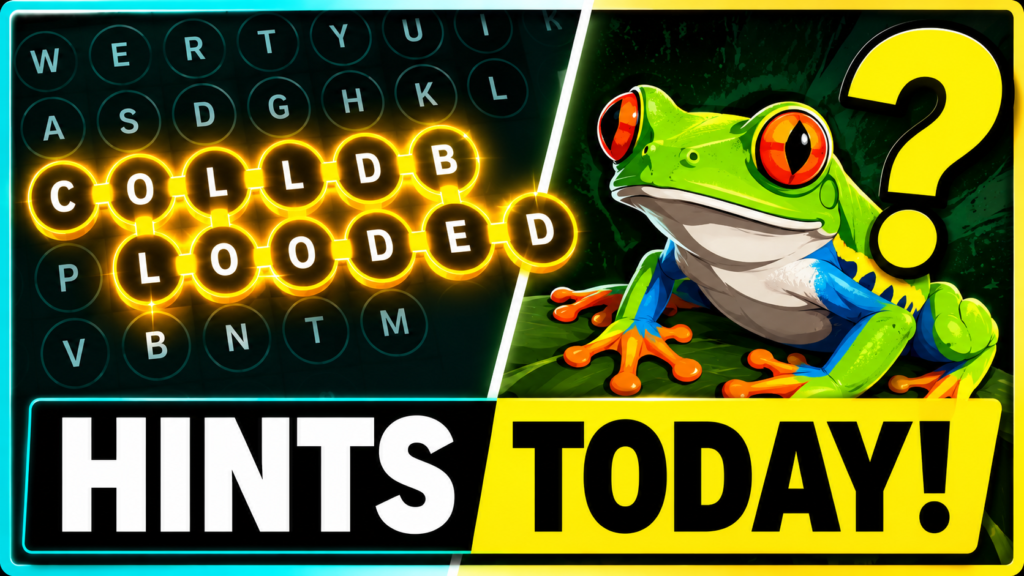
Today’s golden Spangram is COLDBLOODED. This eleven-letter compound word represents the shared biological trait that defines every creature hidden in the matrix.
+-------------------------------------------------------------+
|                SPANGRAM PATHWAY SPECIFICATIONS              |
+-------------------------------------------------------------+
|  Starting Node: Letter 'C' [Row 1, Column 1]                |
|  Direction: Snakes horizontally and loops along the top row.|
|  Ending Node: Letter 'D' [Row 2, Column 5]                  |
|  Result: Touches opposite boundary edges perfectly.          |
+-------------------------------------------------------------+
Locating this core phrase early provides an enormous tactical advantage. It serves as a visual barrier that splits the jumbled letters into separate fields. This clear division makes it much easier to isolate and solve the remaining word pockets.
Solution Strategy for Today’s Matrix
To clear this board smoothly without wasting your hint meter, try using a progressive structural system.
First, look at the upper rows to trace out the long Spangram path. Second, clear out the short, familiar words along the left wall to open up the board. Third, tackle the dense, multi-syllable terms hiding in the corners. This step-by-step approach ensures you maintain perfect control over the grid layout.
Word Discovery Techniques
When you need to find long words like CHAMELEON, look out for rare letter combinations. The letters C-H-A, for example, stand out immediately in a sea of random consonants.
Similarly, finding a double letter like the L-L pairing in the lower rows points you straight toward BULLFROG. Tracking these structural anomalies lets you spot key starting points without needing to guess blindly.
Similar Puzzle Patterns
Today’s puzzle uses a structural pattern frequently seen in scientific categories like “Marine Biology” or “Botany 101.” These themes rely on a single, long adjective to serve as the Spangram.
The game editors then arrange common examples of that trait around the board, ensuring the grid contains a balanced mix of short, familiar words and longer, more challenging terms.
Difficulty Analysis for Game #826
We rate today’s puzzle as Moderate. The theme itself is quite clear, and the vocabulary words are familiar to most players.
However, the real challenge lies in the complex, winding paths of the longer words. Connecting a nine-letter word like CROCODILE around a tight corner requires strong spatial awareness, which keeps the gameplay engaging from start to finish.
Strategies and Techniques for Success
To consistently win at Strands, you must shift from simple word hunting to systematic board management. Expert players rely on a technique called boundary isolation.
Instead of searching the center of the board where letters are densely packed, look along the outer edges and corners. Letters tucked into these tight spaces have far fewer connection options, making it much easier to deduce the correct path.
Common Patterns to Look For
Keep a close eye out for common prefixes and suffixes like -ON, -LE, and -ILE. In today’s puzzle, noticing the ending -LE in the lower-right corner instantly reveals the path for TURTLE.
By training your eyes to spot these frequent word endings, you can quickly determine which direction a word is traveling across the grid.
Real Examples from the Board
Let’s look at how a shorter word unfolds on the board. Consider the path for SNAKE in the lower-left quadrant:
[S] (Start) -> [N] (Right) -> [A] (Down) -> [K] (Right) -> [E] (Up/End)
This compact, interlocking shape is typical of shorter words in Strands. They wind tightly around themselves to save space, leaving the longer paths to stretch across the open sections of the board.
Expert Insights into Language Design
From a linguistic perspective, today’s puzzle is a wonderful exercise in semantic mapping. Your brain relies on an internal network of related concepts to solve these challenges.
Seeing a word like SNAKE instantly prepares your mind to recognize CROCODILE or CHAMELEON. This cognitive priming shows that word games are far more than simple visual exercises—they are deep workouts for your brain’s language centers.
Benefits and Applications of Word Puzzles
Playing spatial word games like Strands offers fantastic cognitive benefits. It strengthens your working memory, sharpens your spatial logic, and expands your vocabulary retrieval speed.
Furthermore, these puzzles serve as an excellent educational tool. They introduce players to specialized scientific terms in a fun, interactive format that helps the information stick.
Mistakes to Avoid When Solving
The most common mistake is spending too much time hunting for filler words just to charge your hint meter. While hints are helpful when you are completely stuck, relying on them too much disrupts your visual flow.
Instead, focus on clearing the shorter theme words first. This naturally creates more open space on the board, making the remaining answers much easier to spot.
Advanced Tips for Pro Players
When you find a letter sequence that looks like a theme word but won’t submit, check if it’s actually part of the Spangram.
For example, you might spot the word COLD early on. Instead of stopping there, look ahead to see if it continues into a longer compound phrase like COLDBLOODED. Finding the full Spangram completely shifts the dynamics of the board.
Future Trends in Puzzle Platforms
As digital word games continue to grow in popularity, we expect to see themes embrace more specialized, educational topics. Puzzles focusing on advanced sciences, historical eras, and linguistics will offer deeper challenges for players.
Additionally, community-driven platforms allow enthusiasts to build and share their own custom grids. This creates an endless source of fresh, creative puzzles for everyone to enjoy.
🤠 Want to Keep Learning?
Don’t let your daily puzzle fun end with just one grid. If you want to play and practice unlimited Strands, check out this incredible game archive tool. It allows you to solve endless custom, community-created word matrices with absolutely no daily limits or locks!
Frequently Asked Questions
What is the theme for today’s NYT Strands puzzle?
The official theme prompt for Game #826 is “Herpetology 101.” This category focuses entirely on amphibians and reptiles, including frogs, lizards, snakes, and crocodiles.
What is today’s master Spangram?
Today’s vertical Spangram is COLDBLOODED. It begins with the letter ‘C’ in the top-left corner and winds its way across the upper rows of the grid.
How many theme words are hidden in today’s grid?
There are 6 theme words in total: 5 regular biological terms highlighted in blue, and 1 master Spangram highlighted in gold.
Is today’s NYT Strands puzzle hard?
The puzzle has a Moderate difficulty rating. While the theme is straightforward, tracking the long, twisting paths of words like CHAMELEON and CROCODILE requires careful focus.
What branch of science does “Herpetology” refer to?
Herpetology is the specific branch of zoology dedicated to studying amphibians (such as frogs and toads) and reptiles (such as snakes, lizards, turtles, and crocodiles).
Where can I find the starting letter for the word BULLFROG?
The word BULLFROG begins with the letter ‘B’ along the lower-left border row and traces smoothly across the bottom edge of the board.
What happens when I submit a non-theme word?
Submitting a valid English word that isn’t part of the theme fills your hint meter. Once you find three filler words, the game will highlight the exact tiles for one of the hidden theme answers.
Can a single letter tile be used in multiple words?
No. Once a letter tile is correctly submitted as part of a theme word or the Spangram, it locks into place and cannot be used again.
What is the best strategy for solving a tricky Strands board?
Start by scanning the corners and outer edges to isolate shorter words. Finding these early clears away visual noise, making it much easier to map out the longer words stretching across the center.
Where can I play more word matrix puzzles like this?
You can practice your skills and explore endless custom, community-created word grids with no daily limits on Strands.cc.
Conclusion
Today’s challenge is a beautifully designed puzzle that celebrates the diverse world of reptiles and amphibians. By combining common terms like SNAKE with longer, twisting words like CHAMELEON, the grid provides a fantastic mental workout.
If you ever find yourself facing a truly stubborn board, remember to take a step back, look for rare letter pairings, and clear the outer edges first. With a systematic approach, you can conquer any matrix and keep your daily solving streak perfectly intact.
7. FAQ Section
1. Where can I find the best NYT Strands Hints Today?
Our dedicated daily portal on Strands.cc delivers the most reliable, human-verified progressive clues, structural diagrams, and full solutions the moment each new board goes live.
2. What is today’s Spangram for the herpetology board?
The master golden solution for Game #826 is COLDBLOODED, which snakes across the upper rows of the character grid.
3. What are the answers for NYT Strands today?
The complete solution list consists of the Spangram COLDBLOODED, followed by the theme words SNAKE, BULLFROG, CHAMELEON, TURTLE, and CROCODILE.
4. How can I clear the word CHAMELEON on today’s board?
Look at the upper right quadrant of the letter soup. Locate the letter ‘C’ and trace its path downwards through the letters H-A-M-E-L-E-O-N.
5. Why is today’s Strands board rated moderate difficulty?
The theme is very straightforward, but tracking long, nine-letter words like CROCODILE through sharp turns can test your spatial analysis habits.
6. Where is the word BULLFROG located?
This long amphibian word starts with the letter ‘B’ along the lower-left border row and runs smoothly along the lowest edge of the grid.
7. How do I unlock the hint tool in the official app?
You must discover three valid non-theme English words of three letters or more. This action charges your automatic meter completely.
8. What is the meaning of Herpetology 101?
This title prompt refers to an introductory lesson on herpetology, which is the zoological branch focused on reptiles and amphibians.
9. Can I play historical Strands games?
Yes, you can access an absolute archive of custom maps and previous daily boards by visiting the custom community tools on Strands.cc.
10. How long is the word TURTLE on today’s board?
The word TURTLE is exactly six letters long and sits tightly tucked away into the lower right corner pocket of the grid
8. Featured Snippets
Featured Snippet Paragraph
Looking for NYT Strands Hints Today? The official theme prompt for Game #826 is “Herpetology 101.” This category highlights the zoological study of reptiles and amphibians. The final solutions include SNAKE, BULLFROG, CHAMELEON, TURTLE, and CROCODILE. The master Spangram that unites the entire board is COLDBLOODED, which winds across the upper rows of the character matrix.
Featured Snippet List
-
Core Theme Prompt: Herpetology 101
-
The Master Spangram: COLDBLOODED
-
Verified Theme Answers: SNAKE, BULLFROG, CHAMELEON, TURTLE, CROCODILE
-
Total Words on Board: 6 Solutions
-
Difficulty Rating: Moderate
Featured Snippet Table
| Theme Element | Word Length | Grid Location Hint |
| COLDBLOODED (Spangram) | 11 Letters | Starts in the top-left corner and runs horizontally |
| CHAMELEON | 9 Letters | Tucked away in the upper-right quadrant |
| CROCODILE | 9 Letters | Winds through the lower-right section |
| BULLFROG | 8 Letters | Follows the bottom border row |
| TURTLE | 6 Letters | Nestled in the lower-right corner pocket |
| SNAKE | 5 Letters | Located in the lower-left quadrant |